
"I'm Positive", How Language Keeps Black America in Chains
Don't knock it until you finish reading it.

In Quentin Tarantino's "Django Unchained," there’s a pivotal moment that, for me personally, being named Django, resonates deeply beyond its cinematic portrayal. Dr. King Schultz, who has freed Django, asks him about a fleeing man's identity. Django confirms it, "Yeah," when pressed with, "Are you positive?" he replies, "I don't know," to which Schultz asks, "You don't know if you're positive?" Django responds, "I don't know what 'positive' means." Schultz then clarifies, connecting Django’s understanding from mere certainty to something deeper, being 'positive.' This exchange is subtle but profound, illustrating a critical boundary of language—the point at which our experiences extend beyond the words available to us. Django knew certainty, he knew what it meant to be sure, but the word 'positive' represented a depth of confidence he had yet to access simply because the language hadn't provided it to him yet.
It's intriguing how our lived experiences can be constrained, or expanded, by our vocabulary. Language not only defines our reality but can also limit our imagination, our potential, and our ability to comprehend deeper truths. When our vocabulary is restricted, our experiences can become restricted as well, preventing us from fully grasping or articulating the complexities of our emotions and identities, as well as making it almost impossible to connect with other people's perspectives if our cultures are not aligned. Cultural differences often magnify these linguistic barriers, causing miscommunication, misunderstanding, and sometimes alienation. Our inability to fully grasp another’s perspective, deeply rooted in differing vocabularies and interpretations, creates invisible boundaries. In cross-cultural interactions, language can inadvertently emphasize differences rather than foster understanding. This phenomenon is especially profound when individuals lack the shared language needed to translate experiences meaningfully, reinforcing cultural isolation and hindering empathy and connection.
Discovering New Words, Discovering New Realities
Yeonmi Park, a North Korean defector, sheds additional light on this concept in her discussion, "Is Mental Health a Privilege?" She explains how, in North Korea, words like "trauma," "mental health," or "depression" simply didn’t exist for her. It wasn't until she reached the U.S. and encountered this new vocabulary that she began to understand and process her past experiences through a new lens. Park's revelation raises a profound question: If we lack the words to describe an experience in the moment we live it, are we truly experiencing it fully, or does the experience itself transform only once language gives it meaning? This question isn't merely philosophical; it directly impacts how we see ourselves and the realities we inhabit. Words give shape to our feelings, legitimizing our experiences and empowering us to confront, process, and eventually heal from them. Without the appropriate language, people often suffer silently, unable to articulate their pain or even recognize that such suffering exists. Language thus acts as both a liberator and a barrier, unlocking new realities when expanded, but confining individuals within narrow perceptions when limited.
Language and Reality in Black America
This dilemma resonates deeply with me, particularly when I think about the lives of young Black individuals living in what many describe as "the hood," or "the trenches." Growing up, I've lost family members and watched friends face unimaginable struggles, many of which we now label "trauma." Yet, for them, it was simply "life." Could it be that the very language we use, or fail to use, shapes their reality and confines their potential? If someone could bridge that linguistic gap, translating dreams and futures into the vocabulary these youths already possess, perhaps we could empower an entire generation. What if, instead of describing their lived experiences as "trauma," we found ways to frame their reality as a foundation for a future rich with possibilities? Could shifting language shift their reality? The experiences of marginalized communities are frequently narrated by external observers, often through the lens of trauma, deficit, or victimhood. This narrative shapes perception, influencing both internal self-image and external judgments. Yet, reframing language to emphasize resilience, possibility, and strength could transform how these young individuals view themselves and their futures. Language thus becomes a powerful tool in reclaiming identity and rewriting narratives from ones of despair into ones of hope and empowerment.
Language as a Social Contract
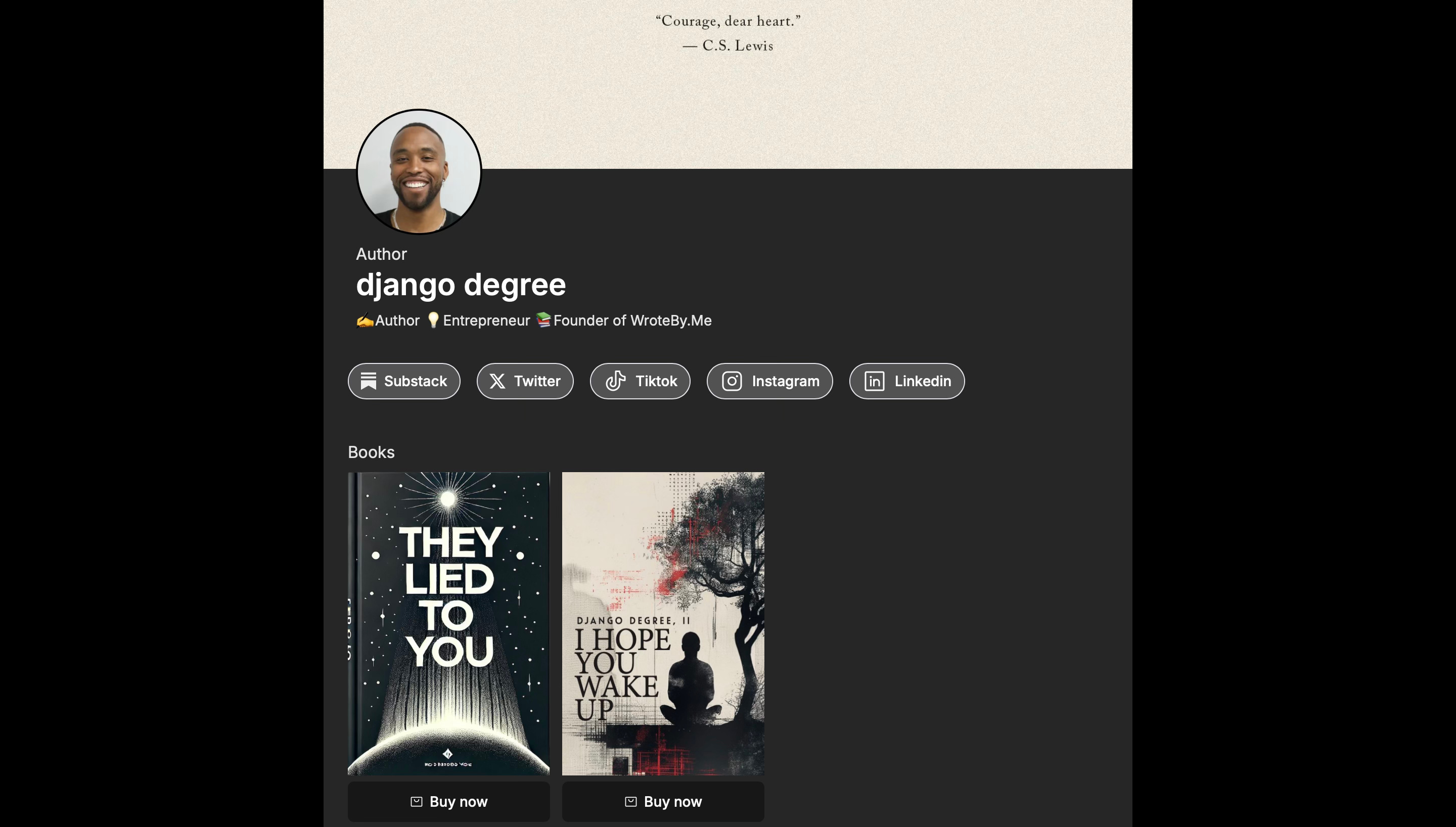
In my book, "I Hope You Wake Up," I explore this concept deeply. Consider the simple yet powerful example of my godson learning to speak. At first, his words are merely sounds, eliciting our reactions without carrying inherent meaning. Only later does he grasp the context, the appropriate usage of words like "Mom," "Dad," "cat," and "pig." Language, therefore, begins as an interaction, an agreement, before it ever becomes a means of true communication. Language shapes our understanding of the world but is never the entirety of our experience. Take the word "love," universally recognized yet eternally insufficient in capturing its profound depths. Words are shadows, incomplete sketches attempting to convey what is far beyond their grasp. We rely heavily on shared language to function socially, yet the subtle nuances, the complex emotions, and the depth of certain experiences frequently remain elusive. Language, as a social contract, helps us navigate daily life, but also inevitably restricts the richness of our individual experiences.
Breaking Linguistic Chains
Applying this idea to Black America today, particularly within communities deeply affected by systemic struggles, we see clearly how linguistic limitations can trap individuals in narrow perceptions of reality. These limitations restrict not just communication, but dreams, aspirations, and identities. However, language’s limitations are not permanent. Just as Django’s understanding expands from "I'm sure" to "I'm positive," there lies immense power in broadening the vocabulary and the context in which we communicate. By embracing silence, listening deeply, and consciously pushing beyond linguistic boundaries, we can create richer, more inclusive realities. It is essential to foster environments where language can evolve freely, allowing marginalized voices to articulate their experiences fully, creating opportunities for true empowerment and social change.
If this article resonated with you, consider exploring these themes further by purchasing my book, "I Hope You Wake Up," or preordering my upcoming release, "They Lied To You," which dives even deeper into these crucial discussions.
Stunning writing. Thank you for your thoughts. I look forward to reading your new book!