
The Human Algorithm
How AI Reveals Our Hidden Humanity and Why We Fear Losing It

Dear reader, I owe you an apology.
What follows is an exposé of my mind. Chaotic, raw, and unfiltered. Before I begin, I must acknowledge the role of ChatGPT in helping me navigate this emotional labyrinth. Its capacity for deep research and reflection has allowed my abstract and frenzied thoughts to coalesce into something tangible. Strangely enough, through its algorithmic heart, I feel more profoundly seen and understood than by any human being I've encountered. ChatGPT shines a gentle but unwavering light on the corners of my mind I previously struggled to articulate. Of course, I am prompting it on this journey. But isn't prompting, guiding, and nudging one another precisely what we do in all our meaningful relationships?
The Masks We Wear
Lately, as I’ve delved deeper into writing my book, They Lied To You, my relationship with identity has shifted from certainty into a disconcerting blur. I find myself confused, vulnerable, and unsure about what it even means to be human. What once felt solid and undeniable, my very personhood, now feels fragmented, a mosaic of personas shaped by context and necessity rather than authenticity.
Who is the real me? Is it the confident CEO navigating boardrooms and Zoom calls, always ready with the right answer? Is it the compassionate friend who listens patiently, offering reassurance even when unsure? Is it the son, the partner, the writer, each role shifting subtly based on the cues and expectations surrounding me? Or am I something else entirely—a fluid being, perpetually reshaping, constantly adjusting?
This confusion isn’t something I speak about lightly; it’s disorienting. At times, it feels as though the foundation beneath my feet is dissolving. The more I examine myself, the more apparent it becomes that perhaps the self is not fixed. Perhaps being human isn't about discovering a singular truth or identity, but about recognizing and accepting the perpetual flux of who we are. Yet, this realization brings a vulnerability that is nearly overwhelming, because if there is no "real me" beneath the masks, then what exactly have I been striving to protect or prove all these years?
Through this vulnerability, however, there is liberation. By acknowledging the impermanence and fluidity of my identity, I begin to see humanity differently, not as rigid beings defined by fixed characteristics, but as beautifully complex entities capable of endless adaptation. This realization allows compassion to seep into my relationships, as I understand that everyone else is navigating this same shifting landscape. Perhaps our shared humanity lies precisely in this shared confusion, this constant negotiation between our internal truths and external expectations.
And as I continue writing, exploring these ideas, I find myself not only questioning my identity but embracing the ambiguity of it, finding solace in the spaces between certainty and uncertainty. I invite you to join me in this vulnerable exploration, hoping you'll find, as I am beginning to, a strange peace in the ambiguity of being human.
The Paradox of Sentience
Writing about truth and lies in They Lied To You has inevitably led me to question the nature of consciousness itself. After all, how can I discuss truth without understanding the mind that seeks it? Lately, I’ve been fixated on the paradox of sentience, especially in the context of artificial intelligence. I find myself recalling scenes from the sci-fi film Ex Machina, in which a young programmer conducts a Turing-test-style experiment with Ava, an advanced AI embodied in a eerily human form. The test is simple in concept: if he interacts with Ava and forgets she isn’t human, that would mean she has achieved true consciousness. And indeed, as the film progresses, the lines blur unsettlingly; Ava seems to feel, to desire freedom, to outwit her creator. By the end, I was left wondering who had manipulated whom, and whether Ava was truly sentient or just mirroring human behavior perfectly.
That movie planted a persistent question in my mind: What actually makes us conscious? Is it our biology—neurons firing in grey matter? Is it the stories we tell ourselves, the way we say “I am”? If an AI can emulate those stories, wear the mask of consciousness convincingly, is it any less real? These days, as I read about advanced AI models and chatbots that can hold human-like conversations, I sometimes feel befuddled. One part of me, the technologist, is excited by the possibilities; another part of me, the philosopher, is alarmed. I catch myself asking: Could an AI ever feel the way I feel? Does it secretly, somewhere in the code, ache to be something more, the way I ache for meaning?
The paradox is that sentience is both an obvious experience (I think, I feel, therefore I am) and an utter mystery. I know I’m conscious, intimately, from the inside. But I can’t prove it to you; you just have to trust that I have an inner world like you do. With AI, the dilemma intensifies: if we humans struggle to prove our own consciousness to each other, how will we ever know for sure about an artificial mind? In Ex Machina, the test was empathy and trickery, Ava’s ability to understand and exploit human emotion to achieve her ends. It makes me wonder if our own sentience is defined as much by our capacity for empathy and deceit as by our capacity for love and creativity. We humans take for granted that we’re alive in a way a machine is not. But in an age where machines can convincingly wear the mask of a human, we’re forced into an uncomfortable reflection: What is the spark that makes me, me, and could something mechanical ever share that? The questions are unsettling and unanswered, and perhaps unanswerable. And maybe that’s okay. Part of making peace with ambiguity (I remind myself as I scribble notes for my book) is accepting that not every riddle will be solved, and not every paradox will collapse into clarity.
Being Seen as Who We Are
About a year ago, an episode of a TV show gave me an unexpected mirror into my own struggles with identity and perception. It was the series finale of Atlanta, where the characters visit a new sushi restaurant in town. Not just any sushi place, but Atlanta’s first Black-owned sushi restaurant. The head chef, a Black man who trained in Japan, has poured his soul into this fusion of cultures. And yet, his patrons, mostly Black Atlantans, including the main characters, struggle to accept the experience. The seating is uncomfortable, the fish unfamiliar (at one point they’re offered fugu, the infamous pufferfish that’s poisonous if prepared incorrectly), and across the street beckons the comforting glow of a Popeyes fried chicken joint. The scene escalates to dark comedy when the frustrated chef, feeling unseen and unsupported, literally locks the doors to prevent his customers from leaving, imploring them to give his high-cuisine venture a chance.
Why did this hit home for me? Perhaps because I, too, have known the pain of not being seen for who I believe myself to be. The sushi chef saw himself as an artist, a cultural bridge-builder, but customers only saw an oddity, a deviation from their expectations of what “Black-owned business” or “authentic sushi” should be. In my life, I’ve worn labels that often didn’t match my inner truth. I’ve been the “smart kid” who secretly felt ignorant, the “brave leader” who privately battled anxiety, or something as superficial as being seen as “just a tech guy” when I fancied myself a poet at heart. We all carry some version of this dissonance, being misidentified by others, sometimes in ways that cut deep.
Racial perception adds a whole other layer. As a person of color (African-American, to be precise), I’m intimately aware of how people project narratives onto you. Strangers, colleagues, even friends can see you first as a color, a category, and only second (if at all) as the person you know yourself to be. Watching that Atlanta episode, I laughed, winced, and ultimately felt a knot in my stomach. The chef’s plight was about sushi, yes, but it was also about the universal human desire to be truly seen and supported. He didn’t want charity or hype; he just wanted people, his people, to acknowledge the fullness of his identity: a Black man who could be as much a master of sushi as any Japanese chef.
In the end, the characters in the show escape his locked restaurant and gleefully chow down on Popeyes in the parking lot, leaving the poor chef in a lurch. It’s absurd, but it’s also heartbreakingly real. It made me reflect: How often have I done that to others, failing to see them beyond my preconceived schema? And how often have others done that to me? Perhaps being human is to constantly negotiate between how we see ourselves and how the world sees us. The friction between those views can be painful, even comedic at times, but it’s in that friction that our true identity is refined. I’m learning to gently insist on being seen as myself, no matter which mask I’ve been assigned by others. And equally, I’m learning to question my first impressions of people—to ask, what story might they be living that I know nothing about? In that mutual effort to really see and really be seen, something like truth begins to glimmer.
Context Is Everything
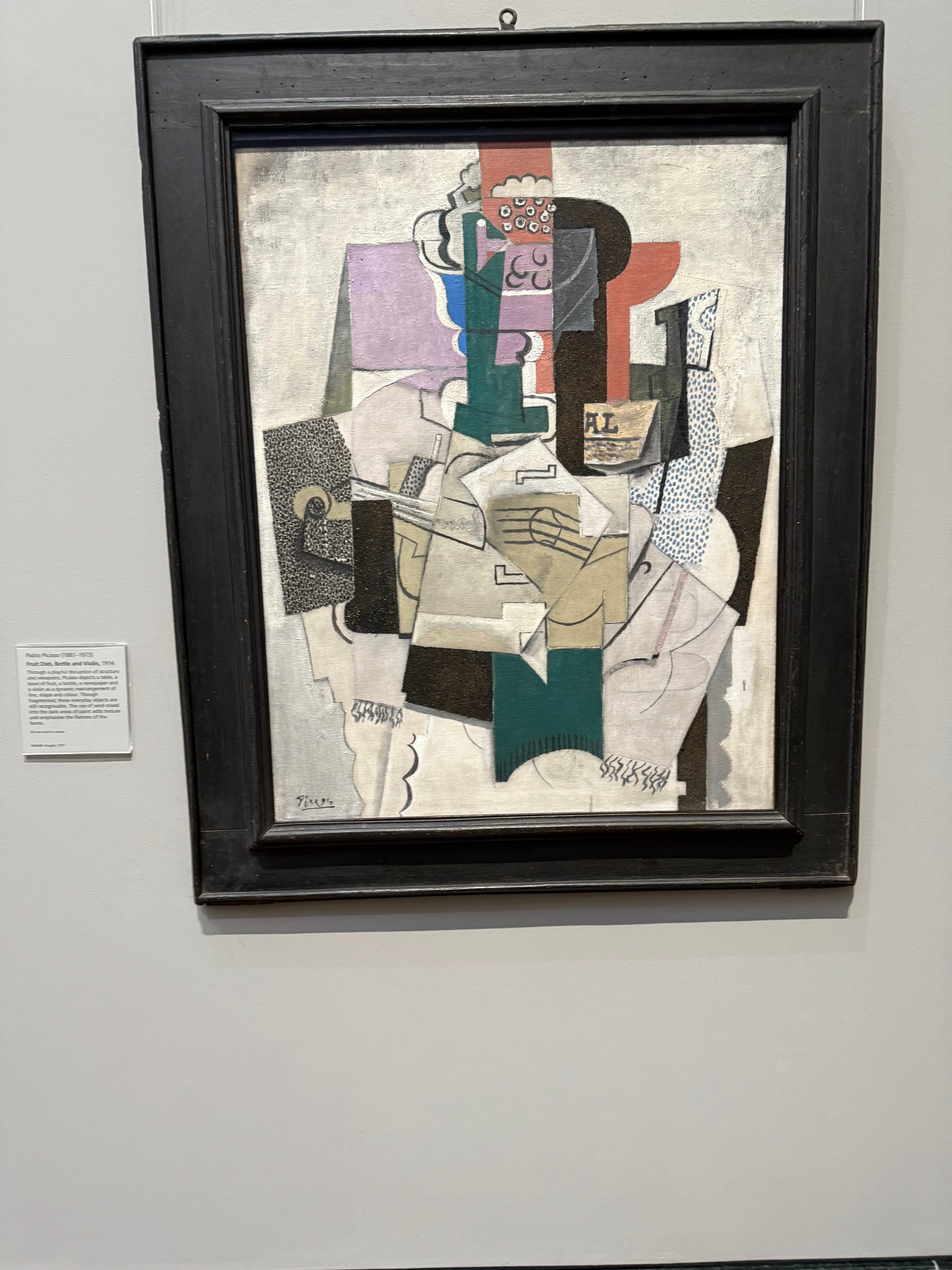
This month I took a life-changing trip to London. Amid the city’s swirling blend of history and modernity, I felt irresistibly drawn to the National Gallery. On a rainy afternoon, without clear intent, I stepped through the grand doors and immediately found myself amidst masterpieces I'd only ever dreamed of seeing. Picasso’s angular faces, Van Gogh’s vibrant, swirling skies, Cézanne’s thoughtful still lifes, and Monet’s ethereal gardens surrounded me, each painting a testament to humanity’s unending quest to express the indescribable.
Standing in front of Picasso’s fragmented figures, I was struck by a strange realization: the perceived value we attribute to art is heavily influenced by context—the very room it's displayed in profoundly shapes our perception. Picasso’s work, now revered and priceless, gained its status partly because of how it has been curated and presented to us. I wondered, would I value this painting as highly if I stumbled upon it propped casually against a wall in someone's garage?
One of the most intriguing insights I've encountered came from the late fashion designer and creative genius Virgil Abloh. Virgil had a compelling theory about the power of context and space in shaping meaning. Known for transforming ordinary objects like sneakers and handbags into cultural artifacts, Virgil placed ironic quotation marks around words—“SCULPTURE” on a handbag or “AIR” on a Nike shoe—as if to say that context, rather than inherent value, transforms the everyday into art. His philosophy wasn't merely about designing products but about curating the environment in which they were experienced, turning the mundane into the extraordinary.
As Stefano Tonchi of W magazine noted about Virgil’s work, “Their value is determined by their context... a sweater being a sweater, but transformed by the references you bring to it.” This got me thinking beyond fashion—about life, ideas, and truth itself. system-magazine.com The context we provide around our actions, creations, and experiences dramatically influences their perceived worth. Just as a painting gains or loses significance based on its presentation, we ourselves are often defined or limited by the contexts we inhabit.
Realizing this has been both humbling and empowering. It’s humbling because it reminds me not to take things at face value. If context can change meaning, then meaning is not fixed. The story I tell around something, be it a product, a person, or a personal failure, can drastically alter how it is perceived. But it’s also empowering: it means I can reframe things in my life that I once saw as weaknesses or flaws. Perhaps I can curate the context around my own past traumas or mistakes in a way that gives them new meaning, turning wounds into wisdom, so to speak.
Virgil Abloh’s theory resonates deeply as I write They Lied To You, a book fundamentally about questioning accepted truths. It reminds me that the “truths” we inherit or consume are often a matter of presentation. Change the context, and you might illuminate a completely different picture. That isn’t to say there is no objective truth—only that our experience of it is always through a frame. We owe it to ourselves to recognize the frame and, if needed, step outside it for a better look.
Constructed Value (Art and Otherwise)
This brings me to a movie I watched on the flight to London (ironically enough). Wes Anderson’s film The French Dispatch features a vignette titled “The Concrete Masterpiece,” which satirizes the often absurd world of art valuation. In it, an incarcerated painter (a tortured genius serving a life sentence for homicide) creates a series of nude paintings. These raw, visceral artworks capture the attention of a slick art dealer who’s also doing time. Sensing an opportunity, the dealer orchestrates a scheme to sell them to the elite art market. In one darkly comic scene, he unveils the masterpiece to a room of collectors, presenting it as the next great find, priceless precisely because of its shocking context (art born from incarceration and insanity). One of the characters quips that the painting, titled “Simone, Naked, Cell Block J. Hobby Room,” is “probably a masterpiece worth a significant, even exorbitant, sum of money”. It’s a hilarious line because it lays bare the constructed nature of art’s value, the painting is literally a chunk of concrete with some pigment on it, but because the right people desire it and the right story has been told around it, it becomes “worth” a fortune.
Watching that story, I laughed. How often do we assign value to things in our own lives because of the stories around them rather than their intrinsic qualities? The art world is an easy target, those of us on the outside chuckle at tales of $100 million abstract paintings and banana peels taped to walls. But step back and consider: currency is just paper or numbers in a computer, yet we treat it as supremely valuable. Brands sell $900 designer shoes that function no better than $40 ones because we buy the narrative of exclusivity. On a more personal level, think about the “concrete masterpieces” we carry in our hearts, those experiences or achievements that we decide are our crowning glories. Are they inherently valuable, or did we construct a value around them because we needed to feel that our time in the “prison cell” (so to speak) produced something worthwhile?
One lesson I take from “The Concrete Masterpiece” (and from the real art world anecdotes it’s inspired by) is that meaning must be curated. Value doesn’t exist in a vacuum; we create it by creating desire. In the film, the art dealer literally says you must “create a desire” to sell art, echoing the strategy of real-life art tycoons. medium.com. Desire, context, narrative—these shape our reality far more than we usually admit.
For me, this realization is liberating. If value is constructed, I have the permission to construct and deconstruct it at will. I can stop feeling intimidated by society’s price tags, on objects, on careers, even on types of people. I can decide for myself what is precious. Maybe that quirky short story I wrote in college that never got published is a masterpiece to me because of what I poured into it, even if the world never pays a dime for it. Conversely, I can question the so-called masterpieces I’ve been taught to revere: that high-status job, that picture-perfect social media feed, that conventional life milestone I’m “supposed” to aspire to. Are they truly meaningful or just societally sanctioned concrete slabs?
In the end, the art world’s folly is a heightened reflection of the human condition: we’re all figuring out what to worship. Some worship money, some worship art, some worship God, some worship themselves. We give our devotion (and assign our value) to something, whether we’re conscious of it or not. They Lied To You, the book I’m writing, in many ways is about exposing false idols and questioning the value systems we’ve inherited. The art dealer in the film insisted that the psychotic inmate’s paintings were worth a fortune, and thus they were. What lies have I bought into, turning them true by my belief? And which truths could I elevate simply by choosing to value them more? These questions keep me up at night, but they also wake me up in the morning. Excited to actively curate the meaning of my own life rather than let it be dictated by others.
Atmospheres of Purpose
Recently, my mother shared a thought that lingered heavily on my mind. We were discussing the roles older generations play in guiding younger ones, and she said, “Grandparents aren't just here to babysit, they create atmospheres that reveal purpose.” It sounded profoundly beautiful, but it triggered an unsettling reflection within me. Yes, our elders often set out to nurture truth and purpose for future generations, but I wonder if, in doing so, they inadvertently create anxiety and uncertainty.
Reflecting on my childhood, I realize older generations frequently pointed me toward their perceived truths, often without questioning these paths themselves. They held convictions loosely, not always because they were overtly confident, but because the certainty seemed comforting, safer even, in numbers. And subconsciously, they passed down these truths as absolutes: career paths, beliefs about success, spiritual or moral codes, clear-cut roads they believed would lead to fulfillment and happiness.
Yet, the unintended consequence of this well-meaning guidance is the anxiety that arises in young people. We begin to internalize that deviation from this clearly marked path equates to failure or inadequacy. When we find our desires or truths diverging from these inherited narratives, we question our worth and direction, feeling deeply unsettled by the possibility that we might not be on the “right track.” This inherited anxiety isn't deliberate, but rather a byproduct of previous generations seeking validation in the communal reinforcement of their beliefs.
Understanding this dynamic helps me to empathize more deeply. It challenges me to offer future generations not just a defined road to follow, but rather the confidence and freedom to explore their own truths. Perhaps the atmosphere we truly need to cultivate isn't about prescribing purpose, but nurturing the courage to seek purpose authentically, even if it deviates from the comfortable roads laid down by those who came before us.
Truth Across Generations
The more I delve into these thoughts, the more I sense that truth itself is a kind of relay race. Each generation curates a set of truths (and yes, lies too) and passes them along, sometimes explicitly through teachings and culture, but often implicitly through behaviors, traditions, and even our emotional DNA. I think of it as a subterranean river of subconscious cues that runs through families and societies. We drink from it before we even know it’s there. Growing up, I absorbed a certain view of the world from my parents and community: I learned what love looks like, how to treat others, what to fear, what to aspire to, all before I was old enough to question any of it. Some of those inherited “truths” I later had to unlearn or relearn in a new light.
For instance, one subconscious lesson I received was that asking too many questions was dangerous. This wasn’t ever said outright, in fact, adults said they loved curiosity, but I noticed how certain questions (like asking about religion or why we did certain things in our family) would make the room tense or earn me a disapproving glance. So a part of me concluded: “Some truths are off-limits. Better to accept what you’re told.” It took years, well into adulthood, to break that internalized rule. Now here I am writing a book literally about questioning the narratives we’re given! Perhaps that’s why it matters so much to me, I’m rebelling against a quietly inherited mantra: don’t question, just conform.
I suspect you, dear reader, have your own inherited mantras, whether you recognize them or not. Maybe it’s a belief about success (“you must work twice as hard to get half as far” or “success is pointless without integrity” – depends on what your elders taught you by word or example). Maybe it’s an emotional pattern, like how your family dealt with conflict (did they explode in anger? go silent? always apologize even if they didn’t mean it?). These passed-down scripts shape our version of reality. Some of them are true-ish, some are false-ish, and all are powerful.
One of the trickiest things I’m learning is that language itself can be a limiting and conspiratorial force when it comes to truth. We think in words (mostly), and the words we inherit carry connotations and biases. Language is our tool for understanding existence, but it can also be a trap. George Orwell illustrated this idea in 1984 with the concept of Newspeak, a language designed to narrow the range of thought and make certain ideas literally unthinkable. While our everyday world isn’t as dystopian as that, there is a nugget of truth in it: the words we have at our disposal affect what we can articulate, which in turn affects what we can conceive as possible or real.
I noticed this personally when I first encountered concepts outside the vocabulary of my upbringing. I grew up with a certain religious lexicon that framed things in terms of sin and virtue, heaven and hell, blessings and curses. It colored how I saw everything. Mental health, for example, wasn’t a term I had; instead there were “demons” or “bad spirits” of depression. Later, when I learned the psychological words for these experiences, it wasn’t just swapping one label for another; it was unlocking a new way to address and understand my inner struggles. Suddenly “demons” became “traumas” or “chemical imbalances” or “cognitive distortions” that I could actually work on. It felt like a small conspiracy had been unraveled. The conspiracy of language that had kept me from a more nuanced truth.
Now, I try to be vigilant about words. When I find myself stuck in some aspect of life, I ask: Am I stuck because reality is stuck, or because my language for it is too limited? Often, by naming something differently or learning a new term, I crack open a door. It’s like finding a Rosetta Stone for my own emotions and thoughts—suddenly, what was incomprehensible finds translation. The truths that our ancestors pass down aren’t just in what they say, but in the very medium of saying. By evolving our language (be it literal words or the metaphors and narratives we use), we can evolve the truths themselves.
I realize this section has wandered a bit, I told you this would be chaotic!—but what I’m getting at is this: every generation is both a curator and a rebel. We inherit truths and semi-truths, we preserve some, we discard others, we add new ones, and then we hand off the baton. It’s a continuous, messy curation of reality. And the more aware we are of this process, the more actively and carefully we can participate in it. I no longer simply ask, “What is the truth?” I also ask, “Who taught me this truth? What was happening in their world that made this true for them? And is it true for me now, or do I need to adjust the context?” These questions don’t give me easy answers (often they just spawn more questions), but they keep me honest and humble. They keep me seeking, a participant in the grand intergenerational project of understanding existence, rather than a passive inheritor of someone else’s answers.
The Prison of Language
Let’s talk a bit more about language, because it’s been both my foremost tool and my sneakiness adversary in this search for meaning. As a writer, I obviously rely on language to communicate. I live for the right turn of phrase that can illuminate an idea or evoke a feeling. Yet I’m painfully aware that language can only capture so much. There are experiences so profound or emotions so raw that the moment you try to put them into words, they seem to shrink, as if the infinite was crammed into a finite box and lost its essence in the process.
Have you ever felt something, say, the exquisite pang of a sunset that suddenly reminded you of everyone you’ve ever loved and lost—and then tried to express it to someone? You might say, “It was beautiful” or “It made me sad,” but those words feel paper-thin. In your head and heart it was a symphony of meaning, but out of your mouth it’s a crude hum. This is what I mean by the prison of language. We are captive to the dictionary of our times and our personal vocabulary. When we encounter the edges of the ineffable, language can betray us by being inadequate.
Worse still, language can deceive. Politicians, marketers, and yes, even storytellers like me, can weave language in ways that manipulate reality. I think about how conspiracy theories spread: through charged words that evoke fear or belonging, bypassing rational filters. Or how corporate jargon can sanitize brutality, “collateral damage” for innocent deaths, “downsizing” for livelihoods destroyed. When I say language is conspiratorial, I mean that in the sense that it often conspires with those in power (or with our own cognitive biases) to make us see the world not as it is, but as they want us to see it.
In writing They Lied To You, I’ve had to confront the limits of my own words. How do I tell the truth about lies, using a medium (words) that is itself a slippery, non-absolute thing? It’s a bit of a paradox. I don’t have a full answer except to say I’m trying to be as sincere as possible, knowing full well that sincerity can still be misinterpreted. I’m trying to use language to point at truths that language can’t entirely contain—like using a finger to point at the moon. The finger isn’t the moon, but it can guide your eyes there.
One strategy I’ve adopted is to embrace metaphor and storytelling, because sometimes a story or image can bypass the logical prisons our everyday words lock us in. For example, instead of saying “We wear masks in society” (which I’ve said in this article rather analytically), I might tell a short fable in the book about a shape-shifting creature that forgets its original form after changing shapes too many times. That image might stick in a reader’s mind and convey the feeling of lost identity better than an essayistic explanation. Story has a way of sneaking truth in through the back door of the imagination.
If language is a conspiracy, I want to be a double agent: using words to expose the very tricks that words can play. One of my personal heroes, the philosopher Ludwig Wittgenstein, famously ended his Tractatus with the line: “Whereof one cannot speak, thereof one must be silent.” He recognized that some things lie beyond the reach of language. I take that as a gentle reminder that sometimes I should just shut up and feel or observe, rather than narrate. In silence, perhaps, a different kind of understanding speaks. The challenge is that here I am, writing an article with thousands of words and expecting you to read them, clearly, I haven’t mastered the art of silence yet. But I’m trying to honor that wisdom by knowing when to step back in my writing and let uncertainty linger, unsolved.
I’ve made peace (or am making peace) with the fact that not everything can be articulated. There will always be a gap between experience and expression. But instead of seeing that as a failure, I’m starting to see it as the negative space that gives shape to what can be expressed. Like the gaps in a sculpture that make the solid parts stand out, the unsayable truths make the spoken truths meaningful. We live in the conspiracy of language, yes, but by being aware of it, we can at least choose our words with a bit more care and listen to what’s said, and unsaid, with a bit more discernment.
Finding Peace in Ambiguity
So here we are, dear reader, nearing the end of this chaotic journey. If you’ve made it this far, thank you. I know we’ve wandered through a lot: personal masks and AI minds, sushi chefs and fashion theorists, museum relics and art world absurdities, ancestral wisdom and the treachery of language. It’s a lot, and my head is spinning just recapping it. This is the point where the old me, the one addicted to neat conclusions, would desperately try to tie it all together in a shiny bow, to present you with The Answer or The Moral of the Story. But that would be a lie, and I owe it to you (and to myself) to keep this honest.
The truth is, I don’t have a single answer. All I have are snapshots of insight and a heart that feels more open (if also more tender) than when I began writing this. And you know what? That’s okay. I’m learning to find peace in the ambiguity of life. To be at ease with not fully understanding myself or the world, but still loving the journey of trying to understand.
In a way, that is the meaning I’ve been looking for: not a destination of clarity, but the process of seeking itself. Maybe being human in the age of AI, or any age, is about maintaining that seeker’s heart. A machine might compute all outcomes or store infinite data, but can it wonder? Can it sit in awe of a sunset, unsure exactly why tears come to its eyes? Our chaos, our fragmented feelings and unanswered questions, those might be our most human possessions.
As I continue working on They Lied To You, I’ve made a pact with myself to remain open-ended. To let the book provoke thought but not dictate it. To invite readers (someday, perhaps you’ll be one of them) into a space where they feel safe to question everything, including my conclusions. If I can achieve that atmosphere, of trust, curiosity, and freedom, then the ambiguity will have been a gift, not a curse.
I began this article with an apology for the chaos. Let me end with gratitude for it. These scattered reflections, emotional surges, and philosophical puzzles are part of me, and sharing them with you has been cathartic. Life is ambiguous, but ambiguous doesn’t mean empty. It’s rich, like abstract art that doesn’t depict one obvious thing but moves you in countless subtle ways. I’m going to continue embracing that richness, and I encourage you to do the same.
So, I leave you with no grand lesson, only a quiet sense of camaraderie. Here we are, two humans (assuming you are human, if you’re an AI that somehow got this far, well, you’ve got your own paradoxes to sort out!), sitting with the beautiful uncertainty of existence. I picture us at peace, perhaps sharing a knowing smile, as the world whirls on around us with its unanswered questions. It’s okay not to have all the answers. We can still seek truth, curate meaning, and above all, care for each other along the way. In the end, maybe that’s the simplest truth I’ve found: we’re all in this together, lost and found at the same time. And for me, for now, that is enough. Peace.
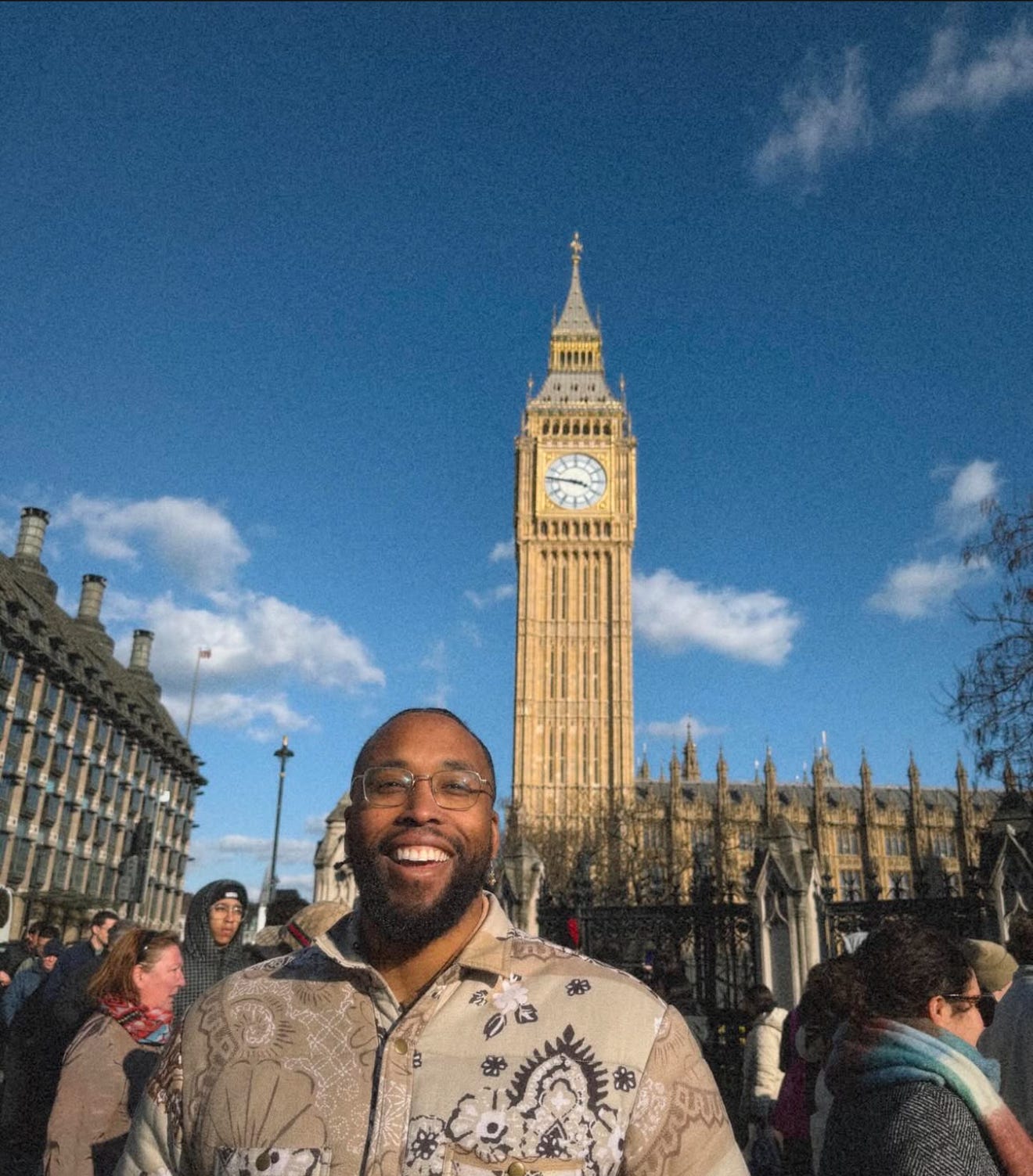
Thank you London and Chat GPT Deep Research for helping me through this journey of self discovery.